


Hi, I’m Jules. After I was laid off from my job as a product design director, I decided to take a sabbatical from corporate life to build my own product. I’m documenting that journey here on Substack, along with something I’m cooking for lunch each week.
Is there anything more tedious than a group of design systems practitioners sitting around debating the definition of a design system? To a fly on the wall, it might seem easier to define what a design system isn’t:
It is NOT a component library
It is NOT a design language
It is NOT a sticker sheet
It is NOT a style guide
It is NOT Storybook
It is NOT Figma
It is NOT Bootstrap
It is NOT Tailwind
It is NOT Shadcn
Or what it lacks:
If it lacks code, it cannot be a design system
If it lacks documentation, it cannot be a design system
If it lacks process, it cannot be a design system
If it lacks governance, it cannot be a design system
It’s for designers and engineers. It’s for the end user. It’s for executives and their bottom line. It’s for making it easy to change the look of the product all at once. It’s for making sure the look of the product stays exactly the same. It’s for consistency… no, no, it’s not for that kind of consistency. It’s for saving time. Going slow to go fast. Velocity. Efficiency. Scale.
I get it. I built a career by focusing on design systems, at startups all the way up to scaled public companies. The larger the team, the more important it is to build shared language and understanding across different people with different roles, goals and expectations. The older the company, the more difficult it is to introduce and maintain design systems across fragmented and dated tech stacks. Taming the entropy and bringing order to chaos is a tall order and we need labels, definitions and agreed upon mental models to make sense of it all.
Which is why my design systems training has been such a thorn in my side in this new chapter, trying to get a brand new product off the ground. Predictably, I worked on the design system from the very beginning. Predictably, it went very poorly.
Design systems at 0-1
With years and years of debates like the ones above rattling around in my brain, I set out to “do the design system right” from the very beginning. There would be order. There would be structure. There would be calm. I was excited to prioritize things that had never been truly prioritized at work.
In some ways, that approach went well. I set up a basic color system using Radix’s theme generator. Using Radix’s color approach allowed me to easily ship dark mode, something that I pushed for hard at Credit Karma and that never made it into production. I picked some icons. I created a button component.
And then… everything kind of stalled. While bemoaning all the things that never materialized at my old job, I’d overlooked one of the best parts: I was rich in design systems raw material. There were so many screens to pull from and there was so much analysis to be done. Scaled product drift and sprawl actually made the design systems work fun. There were always new features launching, keeping the system fresh by pulling it into new and more future-forward directions. In this new world, I had no design debt but I also had no raw material to work with.
I’d also overlooked how gatekeep-y my design systems thinking had become. A long time ago, in my first few years at Credit Karma, I was on the interview slate for a designer interviewing to be on a feature team. In our 1:1 session, he was excited to show me the design system he’d built for the tiny startup he worked at. I appreciated his enthusiasm, but my inner dialogue was incredibly cynical. “Yeah… but this isn’t really a design system. There’s just one designer and one engineer. How can you call it a design system when it’s only for two people?”
A system for two
Time is a flat circle. Now I’m the designer at the tiny “startup,” working with a single engineer. To make progress, I had to check all of my design systems aspirations at the door and lean fully into designing and building our product the messy way. In Bird by Bird, a book about writing, Anne Lamott calls this the “down” draft:
“A friend of mine says that the first draft is the down draft—you just get it down. The second draft is the up draft—you fix it up. You try to say what you have to say more accurately. And the third draft is the dental draft, where you check every tooth, to see if it’s loose or cramped or decayed, or even, God help us, healthy.”
I’ve been heads down on the down draft of our product for the last 5-6 months and it’s finally time to start cleaning it up. I’ve been experimenting with process, creating my own mad scientist design system / visual design “lab” and spinning up agents to do the audit work.
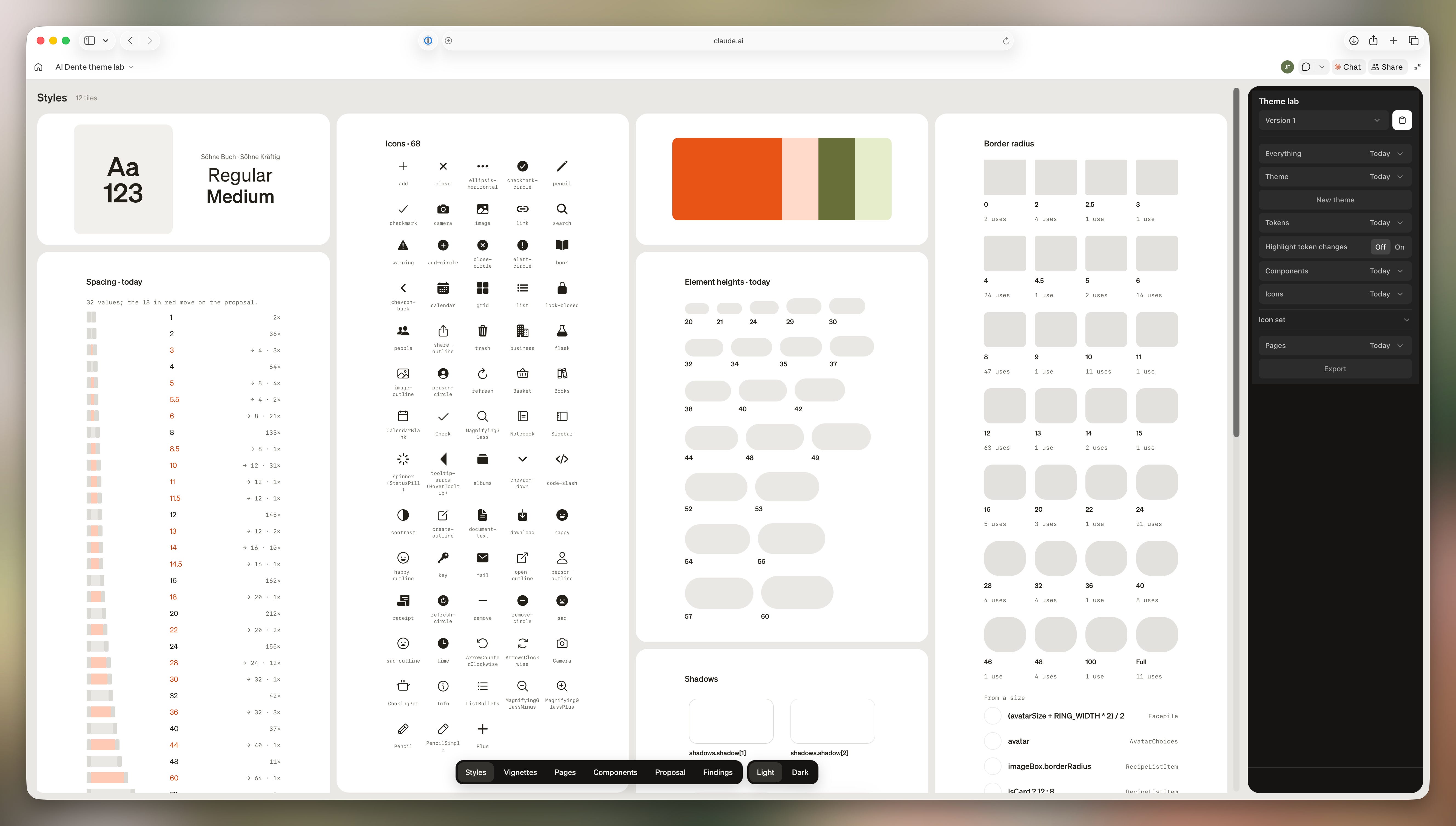
The audit revealed:
Screens: The app has 44 routes. Counting every step, sheet and possible state, I ended up with 202 different screens
Components: 295 components, including 12 different icon buttons, 6 ways of showing a form error and 5 kinds of badges
Border radii: 37 different radii used in 253 places, including half-values like 2.5 and 4.5
Font sizes: 16 font sizes across 710 pieces of text. Combined with weight and line spacing, we had 37 different text styles
Spacing: 38 different spacing values across 1,146 places, including half values like 5.5, 8.5, 11.5, and 14.5
Shadows: 11 different shadows, defined in 3 different ways
Icons: 68 icons used 195 times, pulled from three different sources
There was way more drift than I would have thought (37 border radii?!), but I actually felt relieved to finally be confronting familiar problems with known solutions. With this kind of raw material, it’s much easier to spot the patterns and see where system needs are emerging.
Design system curiosities
Will the final outcome of all of this cleanup work “count” as a design system? I’m not sure. Probably not in the traditional sense. Over the last few years, my own working definition of a design system has veered away from meeting strict criteria into something more directional and end-user oriented. I think of a design system as a tool that helps you ship products that look and feel like they came from one hand.
I’ll leave you with some design system curiosities I’m interested in exploring over the next 6 months:
What does it mean to have a design system when the team will never be bigger than two people?
Where do agents fit in, both as design system maintainers and as design system consumers?
Will our design system ever need to exist formally in a design tool?
What design system form factors might exist now that weren’t feasible before?
What would always-on agents mean for design systems?
Lunch
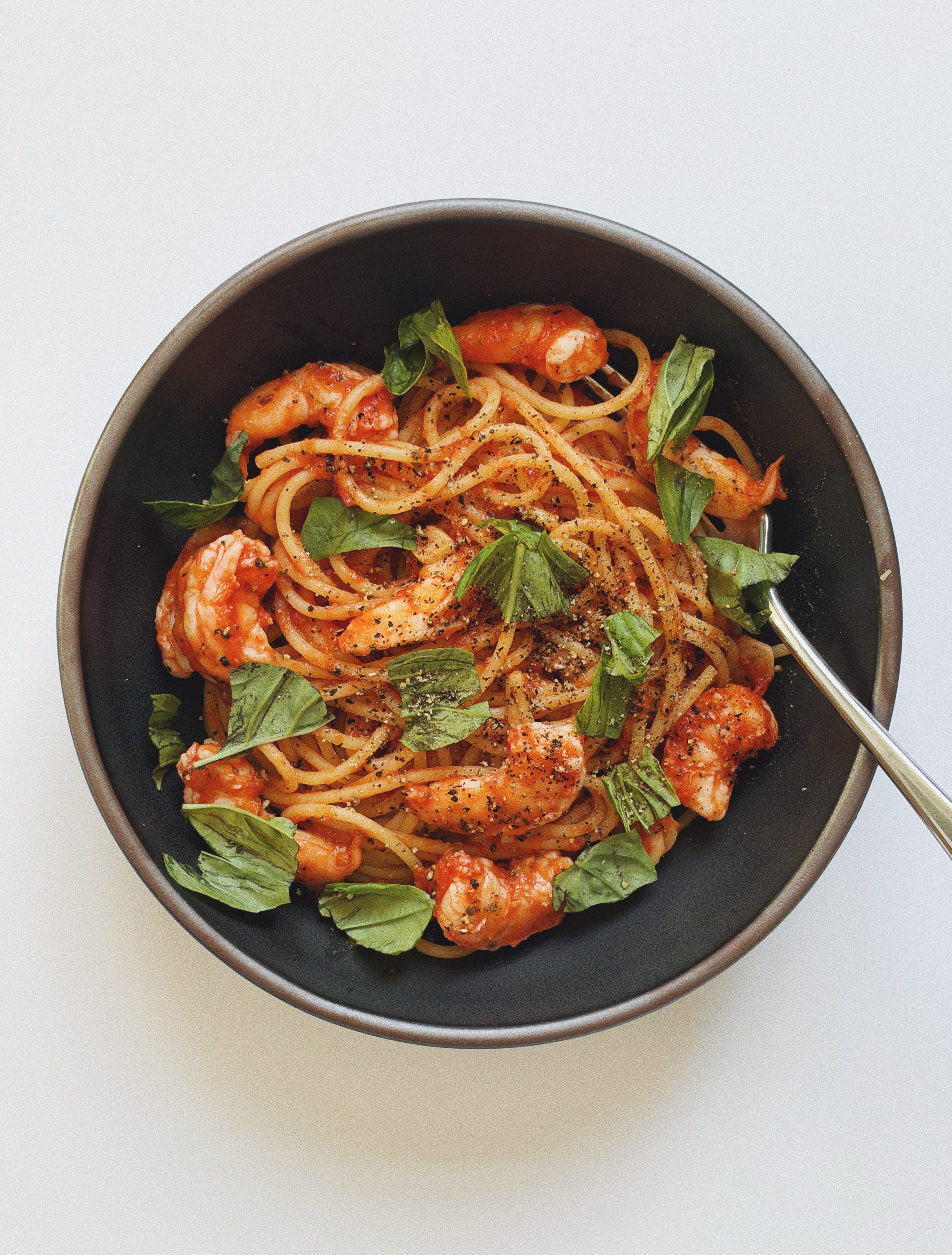
This week for lunch, I made Carla Lalli’s Spaghetti with Spicy Tomato Scampi from her Substack.
See you next week!